Let’s say you’ve spent three months getting your page to rank for a high-value keyword in your market — “Los Angeles portrait photographer,” “estate planning attorney,” “small business accountant.” You finally hit the top three. Traffic is pouring in. But your phone isn’t ringing. You dig into the data and realize the people clicking your link aren’t looking to hire anyone — they’re students, researchers, or tire-kickers hunting for free resources. You’ve won the ranking battle, but you’ve lost the intent war.
When it comes to SEO, keywords are just the surface — especially the long-tail phrases that carry the clearest signals of intent. What lies beneath — the search intent — is what actually drives revenue. If you don’t align your content with what the user actually wants to achieve, Google will eventually figure it out and demote you, or worse, you’ll stay at the top and waste your budget on the wrong audience. This guide covers the tactical process of identifying, analyzing, and mapping search intent to ensure your content strategy actually converts.
TL;DR: Search intent is the “why” behind a search query. To determine it, analyze the top-ranking results on Google to see what content types (blogs vs. service pages) and formats (lists vs. guides) are winning. Match your content to one of the four primary intent categories: Informational, Navigational, Commercial, or Transactional.
The Four Pillars of Search Intent
Before we look at the “how,” we have to understand the “what.” Most SEO professionals categorize intent into four buckets. Recognizing these is the first step in any keyword audit performed by a professional Los Angeles SEO agency.
1. Informational Intent
The user is looking for knowledge. They have a question or a problem they need to solve. They aren’t ready to hire or buy yet — they are in the “learning” phase. These queries often start with “how to,” “what is,” or “do I need.”
Example: “How do I know if I need an estate planning attorney?” The user isn’t ready to book a consultation — they want to understand whether they have a problem worth solving.
2. Navigational Intent
The user wants to go to a specific website or location. They already know the brand — they just find it faster to type the name into Google than to recall the full URL.
Example: “Hartmann Studios contact page” or “GO-SEO Los Angeles.”
3. Commercial Intent
The user is in the market for a product or service but hasn’t made a decision yet. They’re comparing options, reading reviews, and looking for validation before committing.
Example: “Best portrait photographers in Los Angeles” or “small business accountant vs. bookkeeper.”
4. Transactional Intent
The user is ready to act. They’ve done the research and are looking for the right place to hire, book, or buy. For service businesses like photographers, attorneys, and accountants, this is the highest-value intent category.
Example: “Hire a headshot photographer Los Angeles” or “corporate tax accountant consultation.”
The “Three Cs” Framework for Analyzing Intent
When GO-SEO sits down to map out a client’s keyword strategy, we don’t guess. We use the “Three Cs” framework to reverse-engineer what Google thinks the intent is. Since Google’s entire business model depends on delivering exactly what searchers want, the current top-ranking results are the ultimate cheat sheet.
1. Content Type
Look at the top 10 results. Are they blog posts, service pages, portfolio pages, or directory listings? If you’re a portrait photographer trying to rank a booking page for a keyword where the top 10 results are all educational blog posts, you’re fighting an uphill battle. Google has decided the user wants to learn — not book a shoot.
2. Content Format
This applies mostly to informational and commercial keywords. Are the top results how-to guides, listicles, comparison articles, or FAQ pages? If you search “questions to ask before hiring an accountant” and every top result is a numbered list, you should write a numbered list — not a wall of prose.
3. Content Angle
This is the specific hook of the top-ranking pages. For the keyword “how to find a family photographer,” the angle might be “what to look for,” “questions to ask,” or “what it costs.” If every top result emphasizes what questions to ask and your page is a straight portfolio showcase, you’re not addressing the user’s actual mindset at that moment — and Google knows it.
Using SERP Features as Intent Cues
Google’s search results page is no longer just a list of ten blue links. It’s a sophisticated interface filled with features that signal intent before you click a single result. As a Los Angeles SEO agency, we pay close attention to these features because they directly affect click-through rates and content strategy.
- Featured Snippets: Almost always indicate informational intent. Google is pulling a quick answer to a “what” or “how” question — a signal to structure your content accordingly.
- Shopping Results / Ads: A heavy presence of paid ads or Google Shopping carousels signals strong transactional intent. For service businesses, ads at the top of a results page mean your prospects are ready to hire.
- Local Pack (The Map): If a map appears, the intent is local. The user wants a nearby service provider — even if they didn’t type “near me.” For attorneys, accountants, and photographers, a Local Pack appearance is one of the most valuable pieces of real estate on the page.
- People Also Ask (PAA): This box is a goldmine for informational intent. It shows you the follow-up questions real users are asking — and covering those questions in your content, or dedicating an FAQ section to them, is one of the most effective ways to signal topical completeness to Google.
Intent Mapping Comparison Table
Use this table as a reference when planning content around a keyword. The goal is to match every page on your site to the intent of the query it’s targeting — not just the keyword itself.
| Intent type | Funnel stage | Common modifiers | Recommended content |
|---|---|---|---|
| Informational | Top of funnel Awareness |
How, What, Why, Guide, Tips | Blog posts, FAQs, Videos |
| Commercial | Mid funnel Consideration |
Best, Review, Vs, Top, Comparison | Listicles, Comparison pages, Case studies |
| Transactional | Bottom of funnel Conversion |
Hire, Book, Price, Quote, Near me | Service pages, Portfolio pages, Contact/Booking |
| Navigational | Any stage Brand loyalty |
Brand name, Login, Location | Homepage, Contact page, Location page |
The Danger of Fractured Intent
Sometimes search intent isn’t clear-cut. This is what we call “fractured intent” — it happens when a keyword is genuinely ambiguous. Take the keyword “family photographer.” Is the user looking for tips on how to photograph their own family? Trying to understand what a session costs? Ready to book one? Google often shows a mixed results page with a blend of blog posts, portfolio sites, and local listings because the intent hasn’t resolved itself into a single dominant category.
When you encounter fractured intent, focus on the dominant intent — the one represented by the top three results. That’s where Google is placing its bet, and that’s the version of the page most likely to earn and hold a ranking.
Search Intent in the Age of AI Answer Engines
Here’s where intent mapping has taken on a new dimension that most SEO guides aren’t talking about yet: AI search engines like ChatGPT, Perplexity, and Google’s AI Overviews are intent engines, not keyword engines.
When someone asks an AI, “Who are the best headshot photographers in Los Angeles?” or “Should I hire a separate accountant for my small business?” — the AI isn’t scanning for keyword matches. It’s interpreting the intent behind the question and retrieving content that best answers it. That means the same principles that govern traditional intent mapping — content type, format, and angle — now also determine whether your business gets cited as an answer in AI-generated responses.
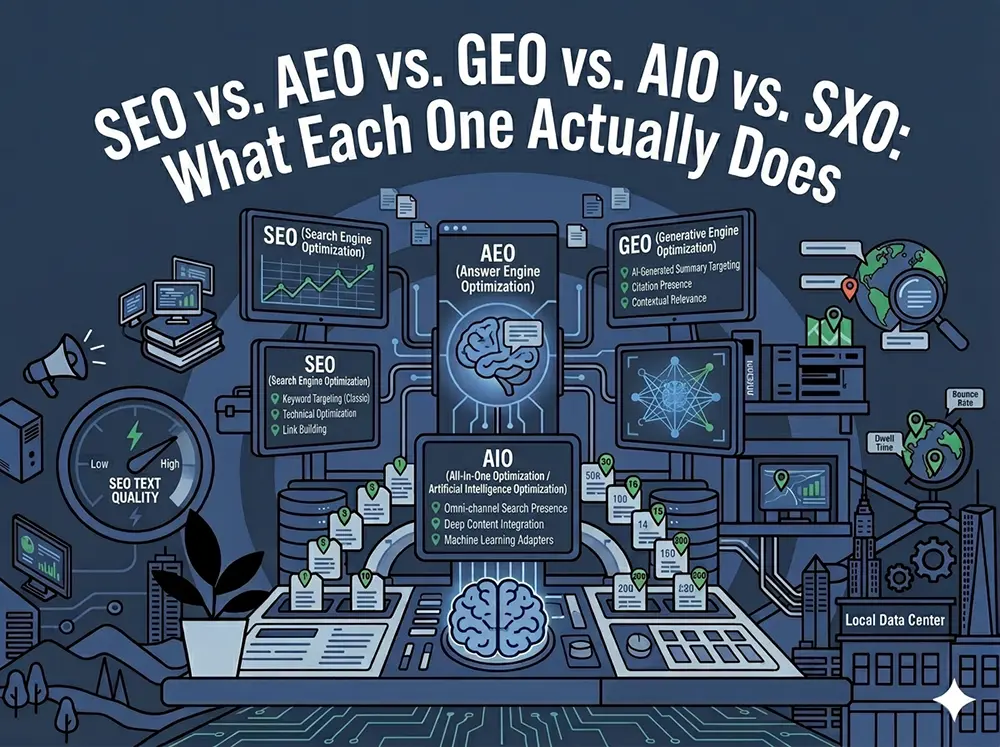
At GO-SEO, we call this Generative Engine Optimization (GEO). The businesses that win in AI search aren’t the ones with the most keywords on the page — they’re the ones whose content most directly and authoritatively answers the questions their ideal clients are asking. If your site answers informational questions well, AI engines will cite it. If your service pages clearly communicate what you do, who you do it for, and why you’re the right choice, you become the answer — not just a result.
Intent-aligned content isn’t just good SEO anymore. It’s the foundation of being visible in the next generation of search.
How to Audit Your Current Content for Intent
If you already have a website with existing traffic, you should run an intent audit. This is a core part of what GO-SEO does for clients, but here’s how to do it yourself:
- Export your keywords: Use Google Search Console to see which queries are driving traffic to which pages.
- Flag high-bounce pages: Look for pages with solid traffic but high bounce rates and low time-on-page. This usually signals an intent mismatch — visitors landed on your page and immediately realized it wasn’t what they were looking for.
- Check the SERP manually: Search those keywords yourself. Does your page match the Three Cs? If the top results are all “how to” guides and your page is a service pitch, you’ve found your problem.
- Pivot or prune: If a service page is ranking for an informational keyword, write a blog post for that keyword and link it to your service page. This respects the user’s journey and gives Google the content type it’s already rewarding.
Key Takeaways for Mastering Search Intent
- Analyze the SERP first: Never write a word until you’ve looked at what’s already ranking for that keyword.
- Read the modifiers: Words like “best,” “hire,” or “how to” are direct signals of where the user is in their decision process. Understanding how keyword signals actually work in modern SEO will sharpen how you read them.
- Match the format: If the top results are numbered lists, write a numbered list. If they’re long-form guides, write a long-form guide.
- Solve the actual problem: Intent is about the task the user is trying to complete — not just the words they typed.
- Think beyond Google: Intent-aligned content is also how AI answer engines decide what to cite. A page that truly answers a question earns visibility in both traditional and AI search.
- Monitor and adjust: Intent shifts over time — especially in professional services where regulations, pricing norms, and buyer behavior evolve. Revisit your primary keywords every six to twelve months.
Frequently Asked Questions
Can a keyword have more than one intent?
Yes. Many keywords carry “fractured intent.” For example, “headshot photographer Los Angeles” could mean someone wants to see portfolios (commercial) or is ready to book (transactional). Google usually balances results across both until one intent becomes clearly dominant. When in doubt, build for the majority intent and address the secondary one within the same page.
How does search intent affect SEO ROI?
It’s the primary driver. Targeting transactional and commercial keywords reaches prospects who are close to a hiring decision. Informational keywords drive more volume but convert more slowly — they build trust over time rather than producing immediate inquiries. The most effective strategies serve the whole funnel, not just the bottom.
Does Google use AI to determine intent?
Yes. Google uses machine learning models including BERT and MUM to understand the context and nuance behind a query — not just the literal words. This is why exact keyword matching matters less than it once did, and why writing for the human reader (rather than the algorithm) has become the most durable SEO strategy.
What does search intent have to do with AI search results?
Everything. AI answer engines like ChatGPT, Perplexity, and Google’s AI Overviews retrieve content based on how well it answers a question — which is exactly what intent alignment is designed to do. If your content is well-matched to a specific intent, it’s also more likely to be cited as a source in AI-generated answers. This is the core premise of Generative Engine Optimization (GEO).
How often should I re-evaluate search intent?
We recommend revisiting your primary keywords every six to twelve months. Search patterns change, and Google’s interpretation of what users want evolves — often without any obvious signal. A sudden ranking drop with no technical explanation is frequently an intent shift: Google updated its model of what the user wants, and your page no longer fits.
Ready to Stop Guessing What Your Clients Are Looking For?
Search intent is both a technical discipline and a practical one. Done right, it transforms your keyword strategy from a traffic exercise into a revenue system — connecting your content to the right audience at the right moment in their decision process.
At GO-SEO, we’ve been doing this for businesses in Los Angeles and beyond since 2007. Whether you’re a photographer trying to turn portfolio visitors into booked clients, an attorney who needs your service pages to reach people ready to hire, or an accountant building visibility in a crowded local market — intent alignment is where the work starts.
Stop ranking for the wrong people. Contact GO-SEO today for a custom strategy built around what your best clients are actually searching for.